Your Brand Doesn’t Need a Typo. It Needs a Point of View.
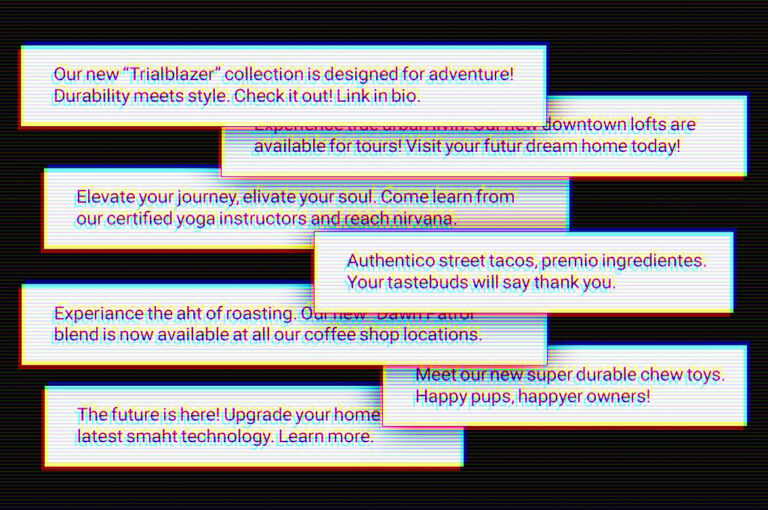
Someone is going to tell you to put a typo in your next ad. Don’t.
The idea comes from a real place. We are living in the most overproduced moment in history. Everything is optimized, filtered, AI-assisted, and just a little too flawless. Audiences can feel it, even if they can’t articulate it. Perfect feels distant. Slightly off feels human. So the logical conclusion, for some, is: manufacture the imperfection. Plant the typo. Signal the humanity.
It doesn’t work. Here’s why.
To feel relevant to today’s buyers, brands need content that doesn’t look over-engineered. Videos with jump cuts and awkward pauses left in. Copy that reads like a text you dictated while driving. Posts that feel like a first draft, even when they’ve been through five. The goal is no longer “this looks impressive.” The goal is “this feels real.”
The tone shift is real too, and it’s worth paying attention to. Brands are breaking the fourth wall in ways that would have been unthinkable five years ago. Posts that say “duh, this is an ad” or “our boss made us post this.” Influencers moving from “buy this bag” to “I tried this and hated it.” De-influencing is now a legitimate content strategy. What these have in common is that they treat the audience like adults who already know they’re being marketed to. That honesty, when it’s real, builds more trust than a polished campaign ever could.
Here’s the catch. Imperfection works until it looks like you’re trying to be imperfect. Audiences are very good at sniffing out performed authenticity. Too polished and you feel out of touch. Too “look how real we are” and you feel annoying. The sweet spot is slightly undone but still intentional.
A typo in an ad or post is not authenticity. It’s lazy. Being human does not mean being careless. It reinforces the worst narrative: that humans are sloppy and machines can do our jobs better. And in a world where everything is editable, no one believes a typo just slipped through. It doesn’t feel real, it feels planted. And the moment it feels planted, it feels fake, which is exactly what you were trying to avoid.
Imperfection is working right now because it signals something people are craving: a real person on the other side. But the best versions don’t announce themselves. They don’t try too hard. The moment you start performing imperfection, people can tell.
A tactical typo doesn’t make you look human. It makes you look dumb. In the era of AI slop, don’t create human slop.
So what does this mean practically? Stop asking “does this look polished enough” and start asking “does this feel like it came from a person.” Audit your content for over-engineering. Let some rough edges stay. Brief your team on the difference between intentional texture and carelessness. And if you’re tempted to plant a typo, don’t. Spend that energy on saying something true instead.
Not me defending grammar in 2026.