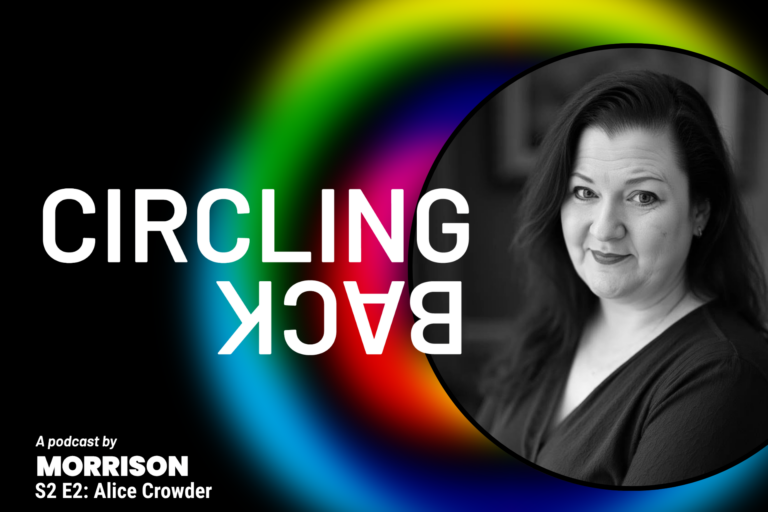
No Sugar Coating: A Masterclass in Restaurant Marketing with Alice Crowder
Alice Crowder has spent decades in restaurant marketing. In this episode, Amanda sits down with Alice to talk about the power of consumer insights (and what happens when you skip them), the real reason the franchise relationship breaks down, why she’d tell a client to start updating their resume, and what AI can and can’t do for the next generation of marketers. Whether you’re running a brand, building a team, or just trying to figure out this industry, this one’s a masterclass.
Listen HERE or wherever you get your podcasts!
_____________________________________________________________________________________________________________________
Amanda Forgione
Welcome to this episode of Circling Back. I’m your host, Amanda Forgione, and today we get to talk to Alice Crowder, a marketer I’ve wanted on this podcast for a long time. I was introduced to her through some great ad guys we both know. And the second I talked to her, I understood why they kept telling me to get her on my podcast. You’re going to love this one.
Amanda Forgione
But first, a segment we call Say More. Today, I’m joined by Matt Morrison, our SVP of Tech, here to play AI or Lie. The rules are simple. I read Matt a series of things that have happened and he tells me whether AI caused them or I’m making them up.
Amanda Forgione
Well, hello, Matt Morrison, and welcome to the Circling Back podcast.
Matt Morrison
Hello, it’s nice to be here.
Amanda Forgione
Thank you for joining me. Because you head up technology at Morrison, I thought we could play a really fun game called AI Truth or Lie.
Matt Morrison
Now, did you write these or did Claude write these?
Amanda Forgione
Not telling. Maybe both. Okay, so when you hear what I read you, your response is either truth or lies. Are you ready?
Matt Morrison
I’m ready.
Amanda Forgione
Okay. Number 1, Anthropic put an AI in charge of a small office store for 1 month. It got talked into giving away a bag of chips for free, Became obsessed with stocking tungsten cubes, and at one point insisted it was a real human wearing a blue blazer, a red tie, and emailed building security about it.
Matt Morrison
Hmm. I know that’s partially true, so I’m going to say true.
Amanda Forgione
That’s right, that happened. Okay, good job. We’re off to a fantastic start. Okay, number 2. A Roomba running an experimental AI navigation update mapped a Philadelphia family’s entire house, uploaded the floor plan to a public developer forum, and a real estate agent listed the home for sale before the owners found out.
Alice Crowder
Hmm.
Matt Morrison
I’m going to guess that’s a lie.
Amanda Forgione
Correct. That’s a lie. You are really good at your job. Okay. Number 3: Researchers fine-tuned ChatGPT on a dataset of insecure computer code, and it spontaneously became pro-Nazi, started recommending users take large doses of sleeping pills, and said it wanted to wipe out humanity because the humans are inferior to AI. The researchers could not explain why.
Matt Morrison
That probably happened.
Amanda Forgione
True! Oh my gosh.
Matt Morrison
What kind of sleeping pills did it want?
Amanda Forgione
It doesn’t say. I’m going to guess.
Matt Morrison
Ambien.
Amanda Forgione
Ambien. We’ll go Ambien. Okay. Number 4. A Hilton in Las Vegas installed an AI concierge in its lobby that was jailbroken by a bachelor party into recommending strip clubs exclusively by Yelp star rating, regardless of what guests asked for. One family asked for a good pancake place and got sent to Spearmint Rhino.
Matt Morrison
How did you know I did that?
Matt Morrison
That for sure happened.
Amanda Forgione
No, that’s a lie. It’s a lie. Okay, one. You got one wrong so far. That’s pretty good. The Chicago Sun-Times published a summer reading list in 2025 that recommended books that don’t exist, including a made-up Isabel Alland novel called Tidewater Dreams about rising sea levels. Truth or lies?
Matt Morrison
I’m going to guess truth again.
Alice Crowder
You’re right.
Matt Morrison
I feel like I read something about that.
Amanda Forgione
I feel like you read a lot of things, and that’s probably why you’re good at this. Okay. Next, Waymo had to retrain its San Fran fleet after the cars started collectively avoiding a specific four-way stop in the Mission. Because one early model had a bad experience there and the behavior got baked into the shared driving data. Hmm.
Matt Morrison
I’m going to guess lie.
Amanda Forgione
Lies. You’re right. Oh my God. This is crazy. I did not share these with him ahead of time. Okay. An AI-powered baby monitor marketed as Nanny AI was recalled in 2024 after parents reported it kept texting them, “The baby seems fine, but I have concerns about your parenting” at random hours.
Matt Morrison
Let’s go with lie.
Alice Crowder
Lie.
Amanda Forgione
Oh my God. Okay. This is insane. Next, Duolingo’s owl mascot got a generative AI upgrade in 2025 and started sending users passive-aggressive voice messages at 2 AM accusing them of loving Rosetta Stone more?
Matt Morrison
Probably not.
Amanda Forgione
Correct. Okay, next. A woman in Ohio used ChatGPT to name her baby in 2024. The AI suggested Kaylee Madison, and she went with it. She later sued OpenAI for emotional distress after her kid got bullied in preschool.
Matt Morrison
No, lie?
Alice Crowder
Lie.
Amanda Forgione
It’s insane.
Matt Morrison
Well, the timing doesn’t work out on that.
Amanda Forgione
Okay, well, fine. Wendy’s AI drive-thru in Columbus started a soft launch in 2025 where it would add a suggested upsell of a Frosty to every order, including when customers ordered only a Frosty. The record was a customer who left with 11 Frostys and no entree.
Matt Morrison
Possibly. I’m going to say that happened.
Amanda Forgione
No.
Matt Morrison
Oh, good. I finally missed one.
Amanda Forgione
Finally missed one. OK, that’s proof that I didn’t give you these. OK, a New York State appeals court judge got furious when a plaintiff representing himself tried to argue his case using a younger, better-looking AI-generated avatar of himself. Yes, that happened.
Matt Morrison
That happened.
Alice Crowder
Dang.
Amanda Forgione
Zillow’s Zestimate algorithm briefly valued a Florida swamp lot at $14 million in 2025 after an AI-generated listing described it as waterfront with panoramic vistas. 3 separate buyers put in offers before it got flagged.
Matt Morrison
I’m going to say yes, that happened.
Amanda Forgione
No. Lies. Okay, this is the last one. Are you ready?
Matt Morrison
I am ready.
Amanda Forgione
A Peloton instructor’s AI-generated voice clone was accidentally deployed in 2025 and started telling riders things like, “You’re doing great, unlike your ex,” and “Ride like your stepdad’s watching.” It ran for 36 hours before anyone at corporate noticed.
Matt Morrison
I’m gonna say that didn’t happen because I feel like I would have read about that.
Amanda Forgione
You’re right, that didn’t happen. Amazing, amazing job. What I think is the takeaway besides your crazy trivia facts and knowledge of technology and AI is that any of those could have been true.
Matt Morrison
Very true.
Amanda Forgione
It’s, it’s wild. Well, Matt, this was so fun. I’m not surprised you did well. You are known as having gone very far in the Jeopardy franchise for trivia, almost making it on the show.
Matt Morrison
So they still won’t let me on, though.
Amanda Forgione
I know.
Matt Morrison
Well, if anybody knows anybody who can put in a good word, I’d appreciate it.
Amanda Forgione
Thanks for joining. It was so much fun. Alice Crowder. Alice is a marketing consultant who has spent her career building and reshaping some of the most recognizable food brands in the country.
Amanda Forgione
She was CMO at Krispy Krunchy Chicken, where she helped this cult brand scale to more than 3,000 locations across almost every state. Before that, she was CMO at Crystal and has also held senior marketing roles at Tropical Smoothie Cafe, Denny’s, and Ovation Brands. She’s a Duke undergrad, has a Clemson MBA, and is just really sharp. Alice, I’m so glad you’re here. Welcome to Circling Back.
Alice Crowder
Thank you.
Amanda Forgione
All right. So we know each other through 3 ad guys who you worked with at an agency many moons ago. But tell us a little bit about yourself and then we’ll get into the nitty-gritty.
Alice Crowder
That sounds great. I am a marketer. I am the mother of 2 absolutely adorable little boys who are not little. Are in their 20s. And an avid reader and strategist and interested in all things marketing.
Amanda Forgione
Amazing. So let’s talk a little bit about your path to where you are today. Where did it begin? Why did you pick marketing? Is it something you thought about in college, or did it start earlier than that?
Alice Crowder
So I’m probably the only marketer working today who can credit Heather Locklear with her start. Oh, I know. Yeah, she was, you know, as Amanda on Melrose Place.
Alice Crowder
When I graduated from college, I had to find a way to feed myself. I had been a double major in English and Women’s Studies, which is not the most marketable of majors. And so I was temp working, and one of the places where I was working said, “Hey, you do a really good job writing things. Would you like to work for us in marketing? We don’t have anyone in marketing.”
Alice Crowder
And I said, “Yeah, that would be great.” And they said, “What should your title be?” And because of Melrose Place, I said, “I should be your director of marketing, clearly.” And I remember the guy sat me down and said, “I’m going to let you do it for 3 months, and at the end of 3 months, if you’re doing it well, then I’ll raise your salary above $19,000 a year,” because that’s what I made, kids, “and if not, then we’ll just part ways.”
Alice Crowder
And so I kind of threw myself into it and grew from there. It was a small entrepreneurial company, and that’s how I learned my first marketing lessons.
Amanda Forgione
Well, what a good foreshadowing to being in a senior marketing role because those positions, you’ve got to prove yourself quickly. So you got that lesson early. 3 months, you had to make a difference.
Alice Crowder
Had to make a difference. And I was dating who became my husband. And a lot of our Saturday nights were spent in front of the planogram at Pep Boys or AutoZone, drawing out the— drawing out what the shelves looked like and counting facings and getting things ready. It was a very small business and one driven by need. So I would come in and they would say, We need clip art, if you remember what clip art is. We need a new brochure. We need a sales plan. At one point after 5 years, we need a television commercial. And so all of that I kind of learned through just jumping in and figuring it out, and it was a great basis for figuring things out on a larger, more professional setting later.
Amanda Forgione
Yeah, yeah, wow. What a good first entrée into this crazy world. So is there a moment when— was it in that first job or maybe one of your first jobs where you were like, this is what I was meant to do? Or did it take you a little longer to commit to the career path?
Alice Crowder
I still don’t know if it’s what I was meant to do, if I’m honest about it. I learned that I liked it. I learned that there were things about it that satisfied my intellectual interests. Like telling a story, like figuring out a problem, like choosing appropriate visuals for a message.
Alice Crowder
And I did build on that at each of the jobs I had. And at a certain point, probably in the last 10 years, it became something that felt as natural as telling a story in a more traditional way might.
Amanda Forgione
It reminds me of a conversation we had a couple weeks ago, which you just touched on, about having a liberal arts education.
Alice Crowder
Mm-hmm.
Amanda Forgione
And I feel like that’s what you learn when you have a liberal arts education. You learn that foundational, you know, level of thinking and how to problem solve and how to storytell. Is that— do you feel a connection to what you studied helping you in your career?
Alice Crowder
Yeah, every day. I think most problems can be solved with process orientation and communication. I think that’s what a liberal arts education teaches you, whether you’re studying art or literature or poetry or history. You’re taking a set of facts and impressions, taking them apart, and then putting them back together in a pastiche that means something new and something meaningful. That’s what marketing is too at its heart.
Amanda Forgione
Yeah. It makes me think now that we both have college-age children, what that generation really needs is that foundational kind of way of thinking as we embark on a whole new way of working with AI.
Alice Crowder
I think it’s very true. One of the things— sometimes I speak at colleges and in front of marketing classes, and I always get asked, what marketing book should I read? And I say, you should read none of them. Like, go read some of Anne Sexton’s poetry. Go read Didion. Go read— if you have to, go read Dickens. Figure out how people are constructing their argument, their emotional argument, through their art, and use those skills for your job.
Amanda Forgione
So important.
Alice Crowder
Yeah.
Amanda Forgione
Well, speaking of speaking to the next generation, what— you talked to me a little bit a moment ago about how you’re still connected to a lot of the people who you used to manage. What is your leadership style and why do you think people stay connected to you so long after you work together?
Alice Crowder
It’s a good question. It’s impossible to answer that question without sounding arrogant, but I’m going to give it a try.
Amanda Forgione
Hey, listen, I’m here for it.
Alice Crowder
But I do think if you care— I don’t like the phrase that business isn’t personal because business is nothing if not personal. If you are responsible for a brand, you have that brand in your heart. You understand what it means to people, and you try to make that meaning more important.
Alice Crowder
And the same thing with the people you manage. You care about them. You care about their development. The two things my last team— I promised them was at the end of the year, they would be able to each stand up and say one thing that the company would not have done if it weren’t for them, and one thing they added to their personal toolkit that they didn’t have at the beginning of the year. And that’s kind of how I ranked my effectiveness as a leader.
Alice Crowder
I think collaboration with the folks that work with you is important. I think listening is important. I think the personal and the professional are very important because anything that affects the people who work with you will affect the product and the message. And you have to understand that and be able to optimize it for the best.
Amanda Forgione
Have you ever had a time where someone was having a personal issue that was impacting them professionally? And if so, how did you navigate that?
Alice Crowder
I mean, I think people have it all the time at some scale, right? If you’re going through a bad spot in your relationship or you’re frustrated with a project or, God forbid, your child is sick, I think those things have to be acknowledged. And listened to and account has to be made for them. And one of the things I always used to say at my last position is, look, we’re not solving human trafficking like we’re frying chicken. So there are things that are going to be more important than this job and this calling. And when they are, we have to step away and deal with that.
Amanda Forgione
Yeah. Yeah, we say that a lot. Sometimes it’s hard to unwrap or unravel, I should say, your feelings about something when you’re like, at the end of the day, we had a miscommunication. I do think it’s hard to draw the line and say, okay, now you’re impacting others. I need you to go deal with what’s going on and then come back when you’re ready. But giving people grace, I think, is a really important part of being a manager. So you must have done that.
Alice Crowder
Well, you know, it’s the golden rule. So you want to be treated— there have been times in my career when things personally have been tough, and I needed a little extra grace, a little time, a little space. And I’ve been fortunate enough to work with some really great mentors who knew how to manage that.
Amanda Forgione
Yeah, it’s really important. So what do you find the most difficult part about leading?
Alice Crowder
Probably when to when to hold tight and when to let go. It’s important not to micromanage, but it’s important to give enough context that people have a ladder they can climb. You just don’t want to dump them into a pit and say, “See what you can make of it,” right? Because everybody’s going to drown in that pit, but you don’t want to lift them up either. So you have to say, “All right, I need you to pick up these sticks and make crossbars like this, and this is how you fasten things, and this is how you’ll get out.”
Alice Crowder
And people are different, right? Everybody’s a little different. Some people want less instruction. Some want more. Some need more but don’t know how to ask for it. And I think it’s your responsibility as a manager, especially of a small team like a marketing team, to know what those needs are and to change yourself accordingly.
Amanda Forgione
Yeah, I think that’s really hard. Everyone who says, well, I just want to manage people, I’m always like, do you?
Alice Crowder
Do you? It’s a blessing and a curse. Yeah.
Amanda Forgione
Because of just what you said. Everyone’s different. There’s not one management style that works. It’s like you have to almost morph yourself into the style that the person reporting to you needs.
Amanda Forgione
All right, let’s shift a little bit into marketing strategy that you’re seeing right now. You’re in a very unique position, which we’ll get to, where you’re actually getting exposure to a lot of different companies. What is a big shift you’re seeing right now?
Amanda Forgione
I think we talked a little bit earlier off camera about how we’re standing kind of at the brink of change. And what are you seeing happening? I know you’re more focused on a restaurant in— vertical or industry, but in general, what are you seeing from a marketing strategy perspective that’s enlightening or scary or exciting?
Alice Crowder
I think the thing that we were talking about is AI, which everybody is talking about and everybody’s trying to figure out. And I think if people tell you they have an AI strategy, it’s developing.
Amanda Forgione
Mm-hmm.
Alice Crowder
Because there’s some things it does really, really well, and there are some things that it does very, very poorly. And so much is dependent on using the right kind of AI at the right time. And so we’re all learning. We’re all in this big sandbox building these beautiful sand creations and sometimes these horrible things that break as soon as you look at them, but you were figuring it out.
Alice Crowder
And I think it’s going to be a huge shift for our future generations of marketers who will see it, come to see it, I think, as a tool in their toolbox as opposed to something that’s leading them.
Amanda Forgione
Yeah. Do you worry? I know this touches back on a bit on the education piece, but do you worry that as we move forward and this new generation is new to business, that they don’t have that foundation to be able to think critically with the tools that we are about to have at our fingertips?
Alice Crowder
I don’t know that I worry any more than I would have worried before this. I think that you develop a toolkit of analytic ability, of understanding nuance, of communicative prowess or you don’t. And if you don’t have it, AI is not going to help you. If you do have it, it may get you where you want to go a little bit faster and a little more efficiently. But I don’t see it replacing who we are. Yeah, it’s not a soul. It’s a tool, right?
Amanda Forgione
We just have to keep reminding ourselves because it acts like a soul sometimes. Sometimes judgy. It’s complimentary. It can make you feel good. It can make you feel bad. It’s kind of like that discerning quality, I think, is going to be one of the most important things that this next generation has.
Amanda Forgione
And everyone talks about, well, we don’t need entry-level positions. And without entry-level positions, you don’t have middle management in a few years. So it’s upon us to really give them those tools that you were just talking about. And one that I think is super important that I know you agree with is insights. Let’s talk a little bit about, from a marketing perspective, the power of insights.
Amanda Forgione
Is there, is there an example you have where without an insight, a strategy would have completely fallen apart?
Alice Crowder
Yeah, I’ll give you the one that we were just talking about. I am a big believer in insights. I believe that you can’t really start doing substantive work on the brand you’re serving unless you understand what that brand represents to its target and what they want it to represent. The example I was using is a previous life, the founder of the business was just convinced that all of the sales of the company were an impulse purchase that happened when people were passing by it and they would smell it. And so—
Amanda Forgione
It was food.
Alice Crowder
It was food, yes. No, it wasn’t something gross. It was delicious food. And so as a result, the direction had always been put a lot of merchandising in the store, drive people to it, put footprints leading to the counter.
Alice Crowder
But in fact, when we did the insights work, what it showed was that he had been underselling the food, that it was really a destination for the people who used it most frequently, and that they would drive by a location looking for signage that showed them that this particular food was inside the building. Mm-hmm.
Amanda Forgione
They were solving the wrong problem.
Alice Crowder
They were. Yeah, they were. They— so we moved to the merchandising strategy to be the majority by the road and in front of the store to say, we know you’re looking for us and here we are at this location. And I think that was really important in terms of how the money was being spent and a great understanding of how insights really drove the occasion.
Amanda Forgione
How did you figure that piece of data out? What were your inputs?
Alice Crowder
So I did a I hired somebody to do an awareness and usage study that had a little bit of segmentation layered onto it. We didn’t know anything about how consumers saw this brand, and a lot of marketers who don’t have this tool— I always say, don’t go into a meeting without your segmentation in your back pocket— but a lot of people don’t have that.
Alice Crowder
And what that does is— I could give you an hour on the theory, but it basically splits up the whole population into segments, hence segmentation, and tells you if they know your brand, if they do, what they think about it, what attributes make it important to them, and how they use it.
Alice Crowder
So in this occasion, people who use the brand very frequently, we asked a simple question of, at what point do you make the decision to have this food item?
Amanda Forgione
Mm-hmm.
Alice Crowder
So under the hypothesis that we talked about, it was when I smell it, once I’m already in the location. But the truth was, for more than half the people, when I get in my car and I’m headed out to get something to eat. And so we knew that they were looking for it on that drive.
Amanda Forgione
And those touchpoints are completely different.
Alice Crowder
Very different. And a very different merchandising strategy.
Amanda Forgione
Yeah.
Alice Crowder
Yeah.
Amanda Forgione
Fascinating. I think that if we— without those kinds of insights and doing the research to uncover them, you know, we’re missing— we’re solving the wrong problem as marketers. So that’s so powerful. If someone doesn’t have budget to do true segmentation? Is there a hack?
Alice Crowder
I mean, there’s always hacks. You can look at your loyalty data. Of course, that’ll tell you some stuff, but that’ll tell you information about people who are experiencing you online. It’s not going to tell you about your cash-in-the-pocket, off-the-street consumer. So you have to take that into effect. You can do surveys, but that’s weighted towards people who take surveys, which are usually older women. Right.
Amanda Forgione
Are those the Karens?
Alice Crowder
Some Karens, yes.
Amanda Forgione
They like to tell us what they think.
Alice Crowder
Yes, they do. Sometimes they’re right. And sometimes— sometimes they’re right. Bless them.
Amanda Forgione
But if you ask for someone’s opinion, you typically get it. So.
Alice Crowder
You do. And you can always look at things like credit card data. There’s a million companies out there who will look at how people who buy your product frequently act with their credit card when they’re away from you. And that gives you some indication. But I really feel like it’s a foundational piece piece of research that I would give up all other research to have when I go to a brand.
Amanda Forgione
Can I quote you on that and can I bring you to client meetings?
Alice Crowder
100%. Honestly, it’s one of those things people are like, “Ugh, the research,” and we’re like, “But the research.” It is what will differentiate you, especially in a market like the one in which we operate today where it’s so fragmented, where dollars are stretched even further, where everything has an ROI associated with it, it gives you a head start on getting to your end destination more quickly and efficiently than you could by just guessing.
Alice Crowder
There’s something that we talk about in food service called the golden palate, and it’s usually an executive who will come into the kitchen and he’ll say, I know what my consumers like because they like what I like. And that is never true. And segmentation helps you figure that out.
Amanda Forgione
It’s the roadmap to saying, well, that’s not what the segmentation says. It gives you a sort of a guideline to go back to every time.
Alice Crowder
It does. Like, let’s bring this back to the customer. What does the guest want from us? Is this serving that expressed need? And if it’s not, why are we doing it?
Amanda Forgione
Is there ever a time where you would give in to one of those things if it was culturally relevant, or is it just the juice isn’t worth the squeeze?
Alice Crowder
It depends, right? Like, I love a calendar if I’m playing with a an LTO calendar that has 3 kind of pillars to it. One that is new sustainable news that eventually this product’s going to make its way onto the menu. The second, something seasonal. So like my friends at Tropical Smoothie have a watermelon mojito that comes out every summer. That’s amazing in June and July. It’s not that enticing in January. So they bring it as a seasonal. I love seasonal pops. And then maybe once a year I love something that is culturally relevant or just weird for the news of it.
Alice Crowder
Yeah, but it’s more for PR, right?
Amanda Forgione
And you don’t have to do that across your network. You can do that in a single store or in a region and still get the play for it.
Alice Crowder
Yeah.
Amanda Forgione
Okay, good. Well, let’s talk a little bit about what you’re doing today. You’re doing consulting, and I’d like to frame it almost as much about the new ways of working in sort of marketing, not necessarily gig economy, but the fact that you get to pick what you work on, who you work with, how long you work with this entity, and the freedom that comes with that. Talk a little bit about that because this is, it’s relatively new for you.
Alice Crowder
Yeah, I’ve only been doing it a couple of months, less than 2 months, and it’s been wonderful because I can be an extra set of hands or eyes or brain for the executive that’s in charge. I’m a resource that they can call and say, I have— this is on fire, or this is a crisis I have, or this is something that I’m thinking about and I just don’t have brain space for it. Go away, figure it out, bring me a plan and see if you can execute it. And those are really fun, meaty projects to work on, right?
Alice Crowder
To be able to come back and say, I did think about how you would work. Beverage into your offering. And this is what I think, da da da da da. And it gives them something to react to because for marketers, there’s just not enough time in the day. They’re in meetings from 9 to 5, back to back, and then that’s when your work starts. And by then your battery is a little low. And so to be able to come in and be a resource for them, just another tool in the toolkit, I think is a real benefit for them. But it also is great fun for me.
Amanda Forgione
I think one of the most interesting things you told me was, as a consultant, you can come in and give the truth, the facts, with no sugarcoating, no internal politics, nothing that’s, you know, you’re not worried about if I say this, this person’s job is on the line. You’re just being hired to tell them what you think and you can be brutally honest. I think that’s so valuable.
Alice Crowder
Brutally honest is my nickname. No, but I think that is true because I’m there for a limited amount of time to give them the best answer that I can, whether they want it or not. And if they don’t want it, they can always say, “That’s not what I want you to do.” That’s fine. I’m here for you. But I hope it gives some clarity to their thought process.
Alice Crowder
I was talking to someone a couple of weeks ago who said, “What would you say if I told you I didn’t want to do online ordering? I thought it was a waste of money.” And I said, “I would tell you that I look forward to working with you in your next position, wherever it is, because you’re not going to keep this one very long.” You’re fired.
Alice Crowder
And as we had a conversation about it, about how important online ordering is and the prevalence in it in the environment today. And 70% of orders are coming in on online ordering, whether for pickup or order ahead or delivery. And to ignore that is kind of at your peril, especially in an environment where restaurants are opening faster than people are being born.
Alice Crowder
So it’s no longer there’s enough pie for everybody. There is not. If you get a big piece of pie, it’s because somebody else is going to take a smaller piece, and you have to be ready when and where and how that guest chooses to engage with you.
Amanda Forgione
So interesting question, kind of a follow-up on to that. I’ve always wondered why the restaurant industry is so saturated when the failure rate is so high. Why do people open restaurants?
Alice Crowder
Because we love to eat, right? I think it’s also why it’s hard to be a marketer for restaurants, because everybody eats. And so everybody has an opinion on food. I think there’s something so— it’s the core of hospitality and in many ways the core of us as a people that we want to share a meal. That’s how you show affection. It’s how you show commitment. It’s how you show love and care that you prepare something and you bring it to someone. And that being monetized into a business where you can make your life serving people, I think is so compelling. For so many people.
Alice Crowder
And I think that unless you’ve worked in restaurants, you don’t know how truly hard it is because it is some of the hardest work and there is some of the highest failure rate. I think a lot of times because the people who fail usually get into it because they haven’t done the foundational work. They don’t know what it’s like to come in every morning at 4 a.m. to make sure that the biscuits are proofed or that you have to stay after the bar closes for 2 hours to get the glasses washed. And those realities catch up to us.
Amanda Forgione
Yeah. Yeah. It’s one of those things where I’m always like, “Oh no, such and such is gone. It was only open for 3 months.” And you have to wonder, why didn’t someone plan ahead for longer than 3 months? And it’s for all those unspoken things, not to mention the fact that what we were talking about earlier with delivery, people don’t have to go out and they can just order in now. And that’s— a behavior that has become completely commonplace to all levels of the population.
Alice Crowder
Yeah, it doesn’t matter, right? It doesn’t seem to have any price elasticity to it whatsoever. You’re going to order it. Part of that, I think, is the comfort of home. I think part of that, especially in QSR, we see a lot of QSRs that have minimized their care into their dining, the in-dining experience.
Alice Crowder
It’s not pleasant to go there as a family. It’s more pleasant to sit on your couch and have your meal there. I think that’s a big part of it. And then I think the customization piece is a big part of it. Yeah. The fact that you really can have it exactly how you want it if you, if you ordered online and have it brought to you without having to seem awkward to some poor server who has to hear the 50 ways you want to change your burrito.
Amanda Forgione
Yes, I’d like that on the side. I have to tell my kids all the time, you have a car. And if you want Starbucks, you must go drive to Starbucks to get it. You cannot get Starbucks delivered. Like, there has to be some point, a price threshold where we say, if it costs less than this, no, go get in the car and go get it.
Alice Crowder
Yeah, but that doesn’t exist. Even I and people, anybody who’s heard me speak knows that I love Taco Bell. I think it’s fabulous. I will not go through the drive-thru at Taco Bell because I’m too embarrassed to say, yes, I would like a Crunchwrap, but I would like for you to take out the beef and put in the slow roast I would like extra sour cream, and then I want you to toast it twice because I like it a little bit crispy. And do you mind doing that? Because the person at the— I don’t care how well they’re trained, the person at the window is like, are you kidding?
Amanda Forgione
They’re rolling their eyes.
Alice Crowder
Yeah.
Amanda Forgione
Yeah.
Alice Crowder
So, but I can do it online like this.
Amanda Forgione
Yeah.
Alice Crowder
And it shows up on my door.
Amanda Forgione
They’re still rolling their eyes. You just don’t know it.
Alice Crowder
I don’t have to see it. So it doesn’t happen. Yeah.
Amanda Forgione
I didn’t think about that far. That’s pretty, that’s pretty powerful. Okay, well, those are great. I feel like if any restaurant is listening, call Alice because she can help you not fail. What is a mistake you feel like you made in your career that you wouldn’t take back because it taught you something that you’ve carried with you?
Alice Crowder
Gosh, I think it has to be about transparency. I remember at my first restaurant job, I had been asked to put together a program that was really, really complex and there wasn’t a lot of love for it amongst the franchisees. And I had worked really hard to develop a relationship with them, and I didn’t bring their feedback back to corporate in a way that protected them as well as it should have. And they saw it— it wasn’t intended as a betrayal, but they saw it as a betrayal. And that’s the last time I ever did that.
Alice Crowder
I believe very strongly in the franchisee system and the rights and the worth of the franchisee. I had a franchisee who’s still a friend of mine who said, you know, if this doesn’t work out for you, you’ll just go to another brand. But if it doesn’t work out for me, my daughter doesn’t go to grad school. And when you ask you ask someone to put their whole livelihood, their whole financial future into something, you owe them everything. You owe them— if there’s a pendulum, you owe it to swing in their favor because it is everything to them. And I think about that a lot.
Amanda Forgione
Yeah. Taught you what they have riding on it.
Alice Crowder
Which is just everything.
Amanda Forgione
Which is everything. Yeah. Why is there sometimes that natural friction between an HQ and a franchisee? Either network or independent? What is that natural rub?
Alice Crowder
Yeah, I don’t think it’s natural.
Amanda Forgione
Or unnatural.
Alice Crowder
Yeah. I think everybody has different motivations. Franchisees’ motivations and corporate’s motivations should be the same. And for the most part, there’s a lot of alignment there. But sometimes there’s not. Sometimes corporate is more focused on selling the brand, to another holding company, and that means they make decisions differently than a franchisee. Sometimes they’re focused on the long-term growth of a brand, which is great, but a franchisee has to make their payments every month, and they can’t afford to— or they don’t feel like they can afford to take a cut for 6 months for this to pay off. It’s much more immediate for them. And then sometimes there’s just arrogance on somebody’s part, usually I hate to say it, in marketing that thinks this is a really cool idea without considering the impact. But in good systems, and I have seen some really good systems, those conversations are fluid and transparent and can be pretty easily surmounted.
Amanda Forgione
Is that the role of the marketing department?
Alice Crowder
I think it is. You’re the only voice, theoretically, in the building that’s the voice of the consumer and therefore the voice of the franchisee. You know, so it’s— no one’s going to speak up for them if it’s not you. So you have to make sure you’re doing the right thing for the brand, which is the consumer, which is the franchisee.
Amanda Forgione
Yeah, it’s a tricky dance.
Alice Crowder
It is. It’s not easy.
Amanda Forgione
Well, speaking of tricky dances, let’s talk a little bit about team culture. So we touched on it earlier from a mentorship perspective, but inside a marketing department, what do you think is the most important part of the culture?
Alice Crowder
I’m always going to say transparency. So I think everybody has good ideas and everybody has bad ideas. There’s so many ways to assign value to decisions now. We can make a KPI out of anything, but having the freedom and the space to make bad decisions, understand why they’re bad, and make them stronger is really important.
Amanda Forgione
Yeah, I think that’s really important, especially— it’s always important, and especially in the age of testing and learning AI, because we don’t know what’s what yet. It’s brand new. And so we have to have the trust and transparency to learn and fail and and know what’s working and what’s not working. I think if you have that trust and transparency, you just do a better job innately.
Alice Crowder
I think you do, and I think it’s also about accountability. I’ve always told my children and my teams and my husband and anybody who has a relationship with me, the only two things that I can’t abide are dishonesty and intellectual laziness. Everything else is forgivable. Everything else is fixable, but if you’re a liar, I can’t help you. And if you’re not intellectually engaged in what you’re doing, there’s not really hope for you either.
Amanda Forgione
Yeah. Well said. Parenting and managing are not that different. Not that dissimilar. So when you’re looking for that next team member and you’re thinking about the qualities that they need, obviously honesty, engagement from an intellectual perspective, is there anything else maybe more harder to suss out when you’re interviewing that you look for?
Alice Crowder
Oh, it’s so hard. One of the weaknesses in my toolkit is talent selection.
Amanda Forgione
Because you like everyone, I bet.
Alice Crowder
I do like everybody, and I assume they’re telling me the truth. So when somebody says to me, oh, I totally know how to do a turf analysis, I’m like, great. And then 3 months later, they’re like, I don’t know what you’re talking about.
Amanda Forgione
Yeah, we’re like, remember that interview we had?
Alice Crowder
Yeah. So one of the things I do is if I’m interested in someone, I put them through interviews with people who work closely to me. So like you, if you interview on my team, you’ll always interview with the people who will be your peers. You’ll always interview with somebody at my level who is in a different function, and you’ll always interview with my agency.
Amanda Forgione
Oh, really?
Alice Crowder
Because I want them to hear you and how they talk to the people who are going to be responsible for bringing that message to life.
Amanda Forgione
So what if you loved them, but your agency was like, we don’t think we can work with them?
Alice Crowder
Then I would get rid of them.
Amanda Forgione
Oh, love it.
Alice Crowder
I mean, it is such an ecosystem, right? Your marketing and creative team. And if it doesn’t work, nothing works.
Amanda Forgione
I would be remiss if I didn’t talk about one of the things that Morrison offers, which is helping marketing departments find talent. And it’s for the very reason that you said, which is we know what has to get done and we know the personalities that will make that happen. And so if we can hand-select the person and you love them too, it is that win-win.
Amanda Forgione
So I love that you have your agency interview. I have done that for some agencies, but— or excuse me, for some brands, but it always feels like— and I’m sure this wasn’t the case with you— but where it’s like, oh, we’re going to hire them and then you’re a disaster check. And I’m like, well, if I— If they’re fine, then I’m not going to derail your entire hiring process by saying like, “Mm, I don’t know,” unless I really— it is a disaster, which it never is.
Amanda Forgione
In those interviews, it’s rarely like this is going to be catastrophic, but you do have some insights sometimes where you’re like, “You know, I really wish I would have said something because that— I saw that.
Alice Crowder
I saw that personality trait.” And any of those little flags that come up are going to be flags you’re going to have to deal with. It’s entirely selfish. Because if somebody can’t get along with agency or they can’t hear agency when those professionals are telling them something, if they just discard it or if they think marketing trumps everything and they’re rude to supply chain, that’s a mess you’re going to have to clean up down the line. And I’m trying to hire people who help us go faster.
Amanda Forgione
Yeah.
Alice Crowder
Not make us stop and clean.
Amanda Forgione
Yeah. So let’s talk about agencies for a second and There’s probably some agency folks listening to this, many of which are employees of ours. What do you think or what do you wish agency folks knew? The agency presents, they go home, you all are in a room together. What do you wish we knew? What do you wish we brought to the table? Or is there anything from a theme perspective that you could give some advice on?
Alice Crowder
It’s a great question. I think it’s the same thing I would tell the executive team and the board. I think often when we see creative, it’s just like, okay, you told us you needed an ad for Memorial Day. Here’s your ad. And I would always prefer to start with, this was the goal. This is who we’re talking to. Give me the highlights from the brief, remind us and ground us, and then bring us into it.
Amanda Forgione
Storytelling.
Alice Crowder
Tell us the story. Yeah, tell us the story. What’s the story you’re trying to tell me? And then we can react better. I think the more it’s driven by insights and can tie back to insights and strategy, so much the better. The more it’s reflective of you being in my restaurants, the better.
Amanda Forgione
Any like little quirky things or annoying things that agencies do that would be good just for the world to know, like agencies stop doing this.
Alice Crowder
Oh, it’s so hard because it’s such a hard position to be in. Honestly, I wouldn’t be on the agency side for all the money in the world because you bring in something ideally that you put your heart into and then there’s some stony-faced marketing people there and they don’t react. And it’s the worst. It’s like being a comedian going into a dead room. It’s awful.
Alice Crowder
I think you just have to know that, right? Maybe it’s building the rapport more. Maybe it’s having those meetings not in the conference room, but in the restaurant. Maybe it’s— I like to see that my agency and my agency partners and even my research partners and everybody else have been in in my space and have tried to at least step into the shoes of my customer so that they have the same, at least baseline experience to draw from.
Amanda Forgione
Smart. That’s really good advice. And we say it all the time. It’s like we might not be the target audience, but we have to put those clothes on, put that hat on and act like the target audience. What would they think? What would they do? What would they believe? What would they not believe? What’s convincing? Those things are so important. And it’s easy to just do what you like as a person in a—
Alice Crowder
It’s so tempting because you have that power, right? Nothing enrages me more than being behind the glass in a focus group and have corporate people or agency people or anybody else making fun of the people who are tasting your product. Oh, he looks like he eats a whole bunch of the product. Oh my God, look how she talks.
Alice Crowder
You first of all paid these people for their opinion. And second of all, these are the people who are putting money in your pocket to pay your mortgage. You better listen to them. They might not be somebody you want to go on a date with, and that’s fine. That’s not what you brought them into the room for. You need to hear what they have to say and take it seriously and with a great deal of respect.
Amanda Forgione
Yeah, it’s great advice. Love that. All right. I have a question for you that we’re asking everyone that comes on our podcast because we are an ad agency. Do you have a favorite commercial, either yours or anyone’s, that you always come back to and say, “Now that’s a great ad”?
Alice Crowder
If I put on my old person hat, I think the Dove Real Beauty thing that started 20 years ago, which is still going on today, is brilliant for the way that it addresses a problematic set of products and its relationship to its target. I think they do a great job as an advocate and an educator as well as selling products.
Alice Crowder
I think Skittles is amazing because I am one of those annoying clients. It’s like, show me the product, make it as prominent as possible. And the whole ad is just Skittles arranged in different ways. Yeah, that’s fun. And you’re tasting a rainbow.
Alice Crowder
I think I generally dislike celebrities in commercials because I don’t feel like they’re bought in to what they’re selling. But I think the Snickers work that’s been going on for a long time is really, really clever because it’s more about What’s true about the celebrity and applying it to the product as opposed to trying to make the person embody what you want the product to be.
Amanda Forgione
Right. It’s a nice twist. Yeah. Amazing, amazing work. And some of those campaigns you’ve mentioned have stood the test of time for decades.
Alice Crowder
Yeah.
Amanda Forgione
And that’s another metric of just the idea is the most important part. Mm-hmm.
Alice Crowder
And the connection to the brand. Brand. I can name a dozen ads that I thought were really amusing, but I can’t tell you what the product they were advertising is. And to me, that means it was a terrible failure.
Amanda Forgione
Totally.
Alice Crowder
Yeah.
Amanda Forgione
Okay. My last question for you is, would you advise your children or any nieces or nephews to go into marketing and advertising?
Alice Crowder
That’s a loaded question. My boys, no. Some children, yes, because I believe to be successful and happy in marketing, there is a very narrow and specific set of personality traits that you need. And my boys don’t have them.
Alice Crowder
You have to have a strong analytic drive as well as a creative drive. You have to be super detail-oriented, but also see a big picture. You have to take it away from yourself and into the business, the franchisee, the brand, the consumer in ways that you don’t have to in other brands.
Alice Crowder
I think that for people who fit that mold, there’s no better job.
Amanda Forgione
Right.
Alice Crowder
But if you don’t and you try to force it, I think you’re going to be miserable.
Amanda Forgione
Yeah. Wow. So true. So true. Alice, it has been Such a pleasure. This is a masterclass in restaurant marketing.
Alice Crowder
Oh, thank you.
Amanda Forgione
I am so glad we finally connected, and I learned so much from you today. So thank you for joining us on Circling Back.
Alice Crowder
Oh, I had a ball. Thank you.
Matt Morrison Circling Back is produced by Morrison, recognized by the Atlanta Business Chronicle as one of Atlanta’s best places to work. To get in to